Oy. It’s that season—the one where everyone and everything here begins moving quickly. You can feel it on the roads, where empty stretches have turned into lines of cars. In the beach parking lots, where a few weeks ago my daughter was practicing shifting gears and now we’re lucky if we get a spot. In the garden, where the just-brown soil is suddenly a roiling, reaching carpet of green. And in the steady parade of end-of-school events for two girls who are growing ever older, ever steadier.
In the midst of all this, I’ve been reaching for anchors. And I’ve been finding them in the usual places, but not in the usual ways. In the kitchen, in the garden. But instead of meals, I’ve been focused on rhythm and repetition. Brewing this week’s batch of kombucha, bottling last week’s. Feeding my sourdough starter in the morning. Processing acorns into flour. Baking an experimental loaf of acorn sourdough and fine tuning the recipe. Baking another loaf, and another. Again, and again, and again.
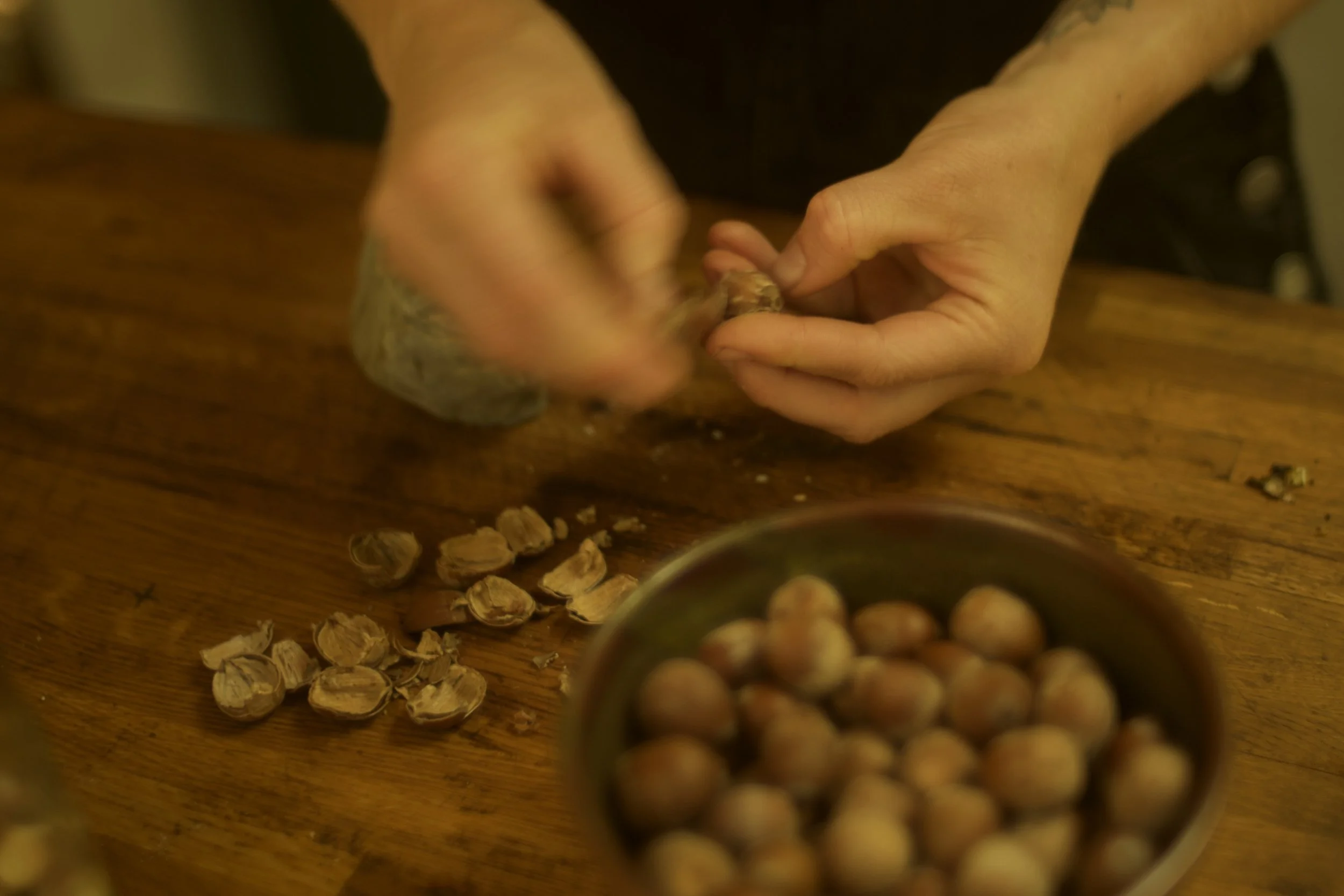
I’ve finally got it, I think—the acorn bread. I first learned about the possibility of acorn sourdough from a woman named Lisa Willey in Maine, who sat with me during the pandemic and told me how she’d taught herself to make acorn flour and then acorn bread and finally cut me a slice and slathered it with butter. I drove away sated and curious—amazed that something so complex could come from the nuts in our yards. I’d recorded her, in hopes of making our conversation into a radio piece one day, and finally as I wrapped up work on my book manuscript in the fall of 2024, I got back to it. I was excited to share the piece with Lisa, and I wrote to tell her. But when I reached out, I learned that she’d passed away suddenly. It was a shock, and incredibly sad. I set aside the idea of bread.
Recently, though, I’ve picked it back up. I’ve finally got my acorn flour processing down, and this means I have an abundance of flour ready to use. I also have two newly gluten-challenged individuals in my house, which means I’ve been reaching for nut flours not just out of interest, but out of need. And need has a way of accomplishing things.
I’m in the process of making what I’ve learned about acorn sourdough into a video—it’ll be up on instagram soon. But in the meantime, here, I’m sharing the basic ratios I’m using and a link to an in-depth sourdough how-to I did during the pandemic with my friend Sarah. I’m using the same techniques and general ratios with the acorn sourdough as those I learned from Sarah, just with a new nut flour in the mix, too.
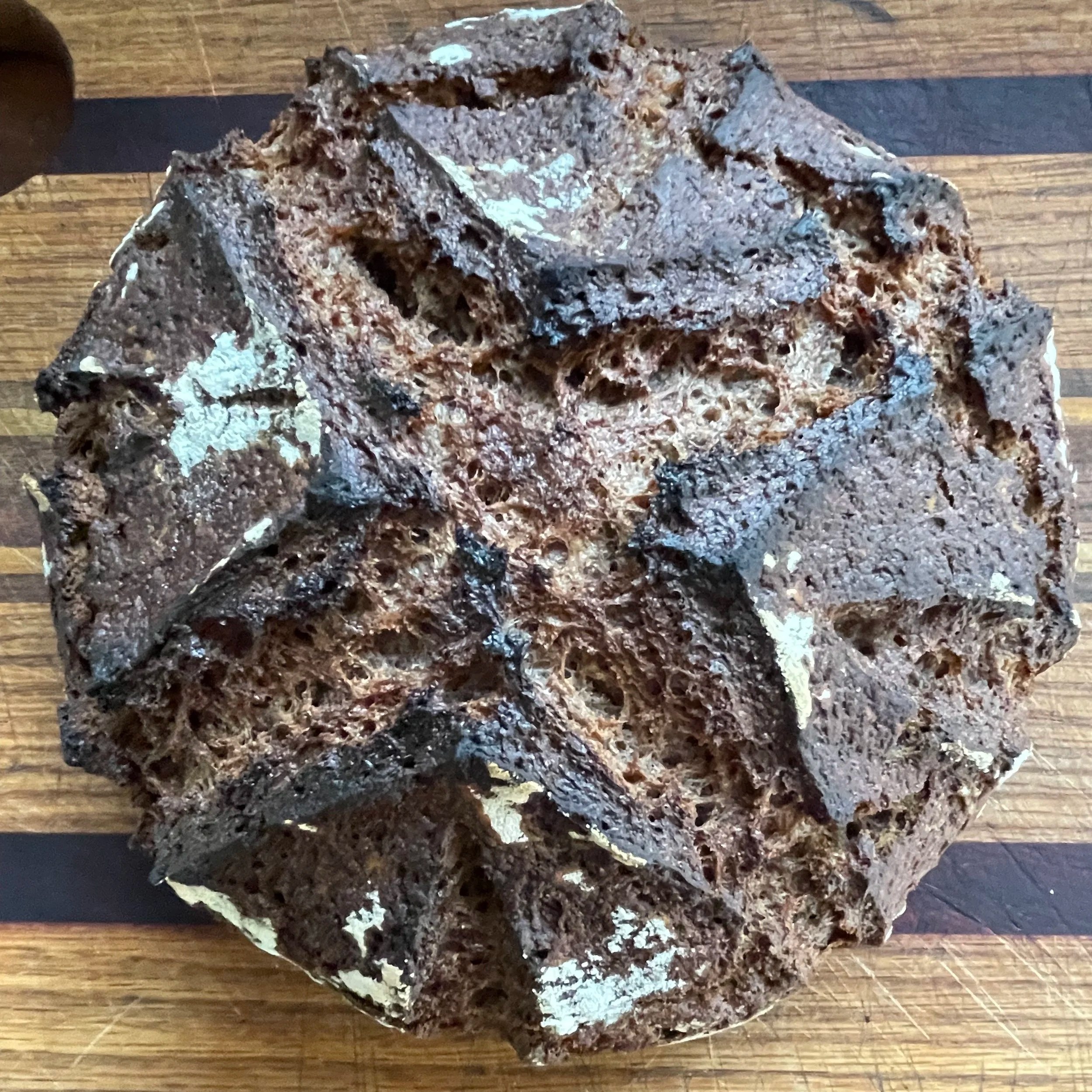
A recent loaf with some nice stretch on top !
ACORN SOURDOUGH
First things first: This is not a beginner sourdough recipe. This is more like one of those recipes you find in cookbooks from the 1700s: it assumes you understand the basics of a kitchen and know what sourdough should feel like in your hands. If you don’t, start here, get that down, and then try acorns in the mix.
Now, for the flour. If you’ve never tried making acorn flour, I refer you to this guide from the Forager Chef (Alan Bergo). It’s quite close to what I do, with a few differences. The first is that I actually prefer acorns from Northern red oaks (Quercus rubra over our local white oaks (Quercus alba)—the white oaks here start germinating very soon after falling and are difficult to collect before they sprout, plus the red oak acorns are bigger. That said, both work for making flour and I collect and use both. The second difference is that I leach my flour using a continuous flow of water—something I learned at the Maine Local Living School and now do in my own home—as opposed to putting it in jars and pouring off the tannins now and again. Otherwise, we are in agreement on how to proceed!
Last but not least, the ratios in this recipe are for DRY acorn flour. If you’re using wet flour (and I often do, because when you take dry acorn flour and run water through it to leach the tannins out, then you have wet acorn flour, so why bother drying it when it’s just going to get wet again??) see my note at the bottom of the recipe.*
Ingredients
just over 600 ml warm water (technically 613 ml, but I eyeball it)
roughly 1/2 cup active, ready to go sourdough starter
3 cups acorn flour
3 cups bread flour, plus more as needed (I use Ancient Grains Bread Flour from Ground Up Grains in Holyoke, MA, and holy smokes good fresh flour makes all the difference!)
1 tablespoon kosher salt
Combine the water, starter, and 3 cups of each type of flour. If things still feel pretty sticky (this depends on your flour, the humidity out, etc.) add more wheat flour until you get the consistency you want and the dough feels right—I often add up to two more cups of the bread flour.
Work the dough together and let it sit for 30 minutes covered with a dishcloth. Come back, add the salt, fold and knead it for 2 minutes or so, cover it again, and do this folding/kneading step two more times, each 30 minutes apart. I usually do this while I make breakfast and get the kids out the door, so it’s just worked into the morning mix.
Then let the dough sit for 5-7 hours, until it’s grown in size and feels right. (Again, see here for more on that and all these next steps). Turn it out onto a floured countertop, shape it, and let it rise for another 30-45 minutes while you preheat the oven and your Dutch oven/bread baking pot (lid on) to 490 degrees F. Just before you’re ready to bake, move the dough onto a piece of parchment paper, give it one very gentle final shape, score the top, and plop it into the pot. Turn the heat down to 410 and bake covered for 25 minutes; uncover and bake another 25 minutes.
Next stop, hot bread, cold butter.
*A note about using wet flour: If you’re using wet acorn flour, you don’t want to add all the water at the beginning. I don’t have measurements down for this yet, but usually I omit the water in the beginning, combining 3 cups wet acorn flour with 3 cups dry wheat flour, and then slowly add in more water and flour until I get the size and texture right. Remember, you can’t really mess this up too badly, because if you add too much flour, you can just add a little more water, and vice versa. If you use this wet flour method, just make sure your dough doesn’t outgrow your baking pot!